
How AR/VR can transform maritime training
 Capt. Vineet Shukla
23 Oct 2025
3581 view
0
0 Comment
With the rapid rise of immersive technologies, this question is no longer futuristic — it’s becoming central to how maritime professionals learn and prepare for real-life challenges.
As ships evolve into complex, tech-driven environments, traditional classroom or onboard demonstrations are increasingly giving way to Virtual Reality (VR) and Augmented Reality (AR)–based training simulations. Let’s explore why this shift is happening, what it means for maritime safety and efficiency, and how the industry can harness it effectively.
Think of a training world where seafarers can:
- Walk into a virtual engine room, inspect machinery, and perform maintenance — without any risk of injury or downtime.
- Practice firefighting and emergency drills in a fully immersive environment — with realistic smoke, heat, and panic factors simulated digitally.
- Experience collision-avoidance scenarios from the bridge — reacting to radar, visibility, and weather conditions that are impossible (and unsafe) to recreate in real life.
That’s what VR/AR brings to maritime learning — experience without exposure.
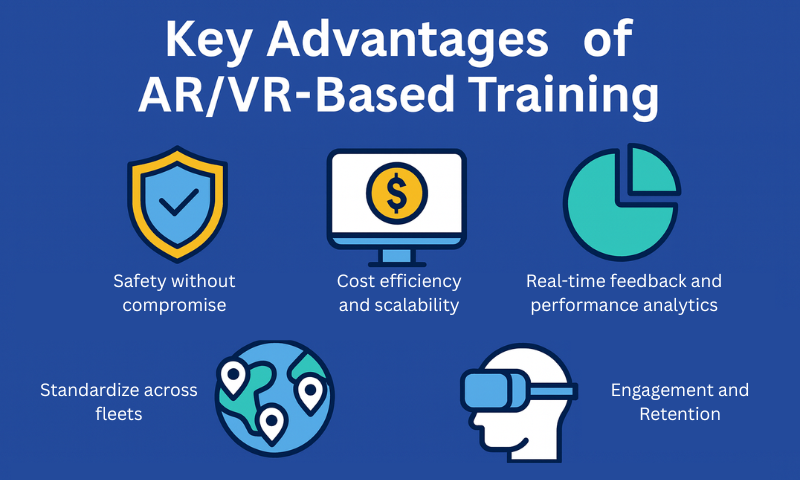
Key advantages of AR/VR-based training
Here’s how immersive learning is redefining the skill curve:
- Safety without compromise:
Accidents and drills can be simulated as often as needed. Trainees can make mistakes, learn from them, and reset the scenario instantly — all without risk to life, ship, or cargo. - Cost efficiency and scalability:
No need to mobilize a ship, crew, or equipment for every exercise. Once developed, VR modules can train hundreds of learners across geographies with minimal incremental cost. - Real-time feedback and performance analytics:
Trainees receive instant data on decision-making, reaction time, and procedural compliance — allowing instructors to identify gaps faster than traditional methods. - Standardization across fleets:
AR/VR ensures consistent quality of training, no matter where it’s delivered — in India, Cyprus, Singapore, or onboard a vessel mid-ocean. - Engagement and retention:
Studies show immersive learning boosts retention by over 70% compared to classroom sessions. The visual and hands-on nature of VR makes procedures ‘stick’ in long-term memory.
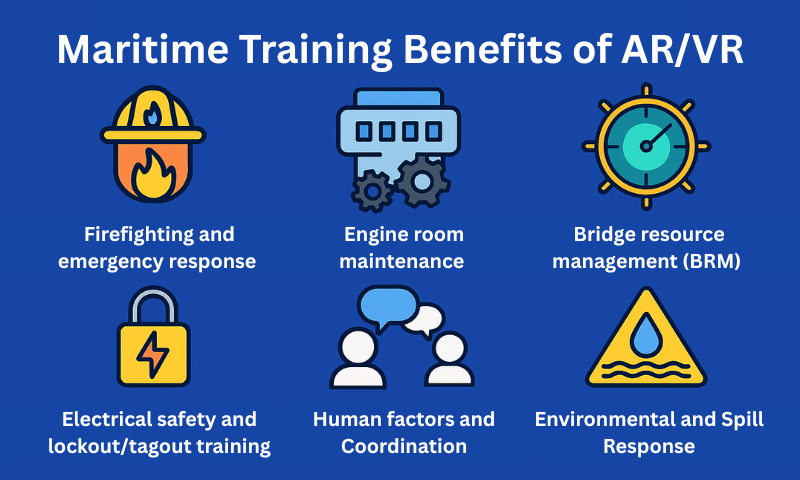
What kinds of maritime training can benefit most
The beauty of immersive tech lies in its flexibility. Here are some areas where AR/VR is already planned to make an impact:
- Firefighting and emergency response – Realistic multi-deck fire simulations, smoke spread patterns, and safe evacuation routes.
- Engine room maintenance – Troubleshooting complex systems without dismantling real machinery.
- Bridge resource management (BRM) – Collision avoidance, radar interpretation, and communication exercises with virtual crews.
- Electrical safety and lockout/tagout training – Reinforcing safety protocols interactively.
- Human factors and team coordination – Simulated fatigue, workload pressure, and communication breakdowns for leadership training.
- Environmental and spill response – Practicing containment and clean-up drills in realistic digital environments.
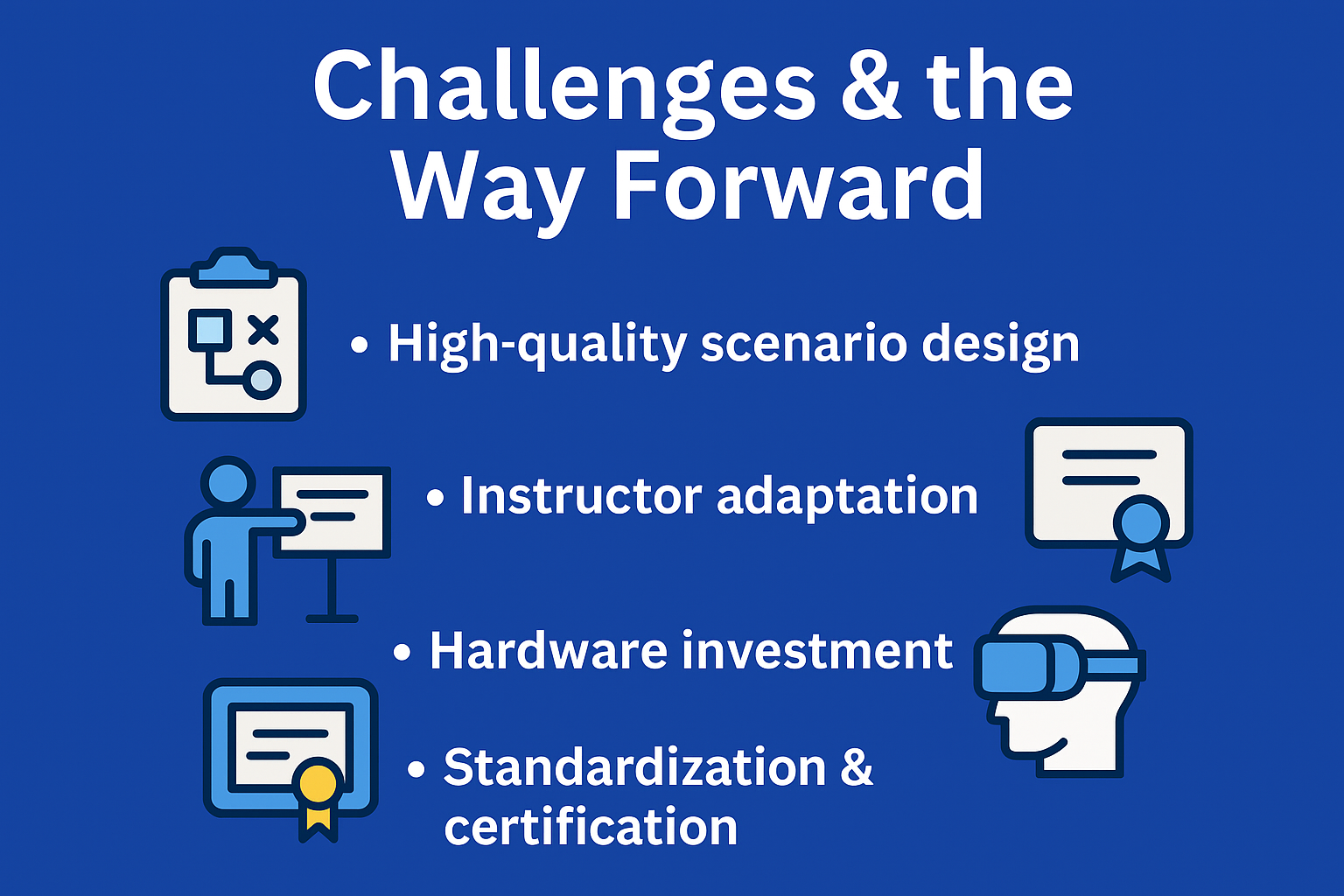
Challenges & the way forward
While the potential is massive, successful adoption requires:
- High-quality scenario design: Simulations must reflect real equipment, layouts, and conditions onboard.
- Instructor adaptation: Trainers must evolve from demonstrators to digital facilitators who interpret data and coach decision-making.
- Hardware investment: Headsets, motion sensors, and compatible systems need capital outlay — though prices are rapidly falling.
- Standardization & certification: Bodies like IMO and DG Shipping will need to align training approvals with digital modes.
The good news? Several academies, ship management firms, and even port authorities are already piloting immersive programs — with results showing faster learning curves and higher confidence among trainees.
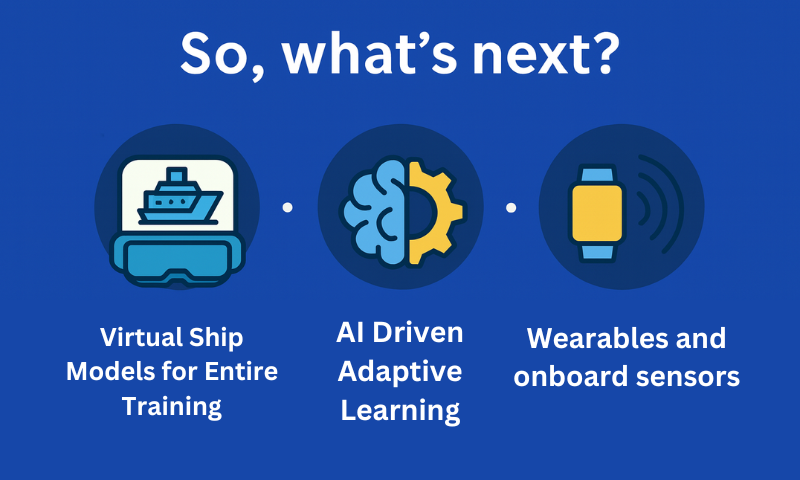
So, what’s next?
In the coming years, we could see:
- Entire virtual ship models used for end-to-end training — from joining procedures to emergency evacuation.
- AI-driven adaptive learning, where the simulation adjusts difficulty based on user performance.
- Seamless integration with wearables and onboard sensors, enabling continuous training while sailing.
Final thought
The essence of seafaring will always remain human — but the way we train humans for the sea is evolving fast.
AR and VR aren’t just about digital gadgets; they’re about creating safe, scalable, and smarter learning ecosystems.



Capt. Vineet Shukla
Capt. Vineet Shukla is a maritime expert with over 30 years of experience, primarily on tankers, and a strong background in ship management, maritime education, and ship recycling. A former Master Mariner and DPA/CSO, he now serves as Director–Education at Sea and Beyond, where he mentors seafarers and maritime professionals through career transitions, upskilling, and higher education. With hands-on knowledge of HSEQ, inspections, and regulatory frameworks, Capt. Vineet offers practical, strategic guidance to those navigating the complexities of sea-to-shore careers.
Leave a comment
View more
Give your career a boost with S&B professional services.
CV Prep/Evaluation Prep Service
 SeaCommerce
Shop maritime books & essentials
DG Medical Examiners
Find approved doctors near you
Tools & Calculators
Free maritime tools for seafarers
More Jobs
Ship management
Gujarat
Operations Executive – Tra..
Agency and Logistics
Mumbai
Vessel Performance Analyst..
Sales and Marketing
Mumbai
Manager – Sales (ISO Tank)..
Interview Prep/Mentoring
Find your polestar with the host of experts available on our platform
Know more

Contact Us