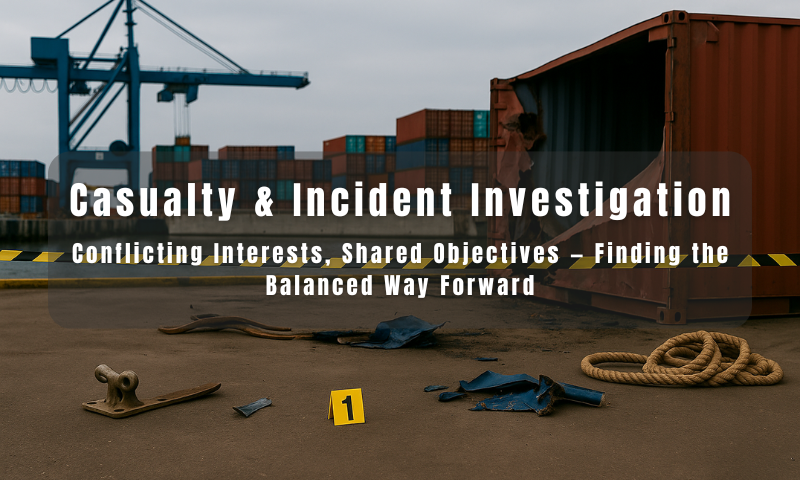
Casualty & Incident Investigation: Conflicting Interests, Shared Objectives — Finding the Balanced Way Forward
 Capt. M. M Saggi
26 Nov 2025
1470 view
1
2 Comment
Investigators know all too well that a single maritime casualty can trigger multiple parallel investigations — each with its own purpose, pressures, and expectations. While the IMO Safety Investigation framework promotes a no-blame, learning-focused approach, real-world practice must reconcile this philosophy with legal, commercial, and regulatory demands.
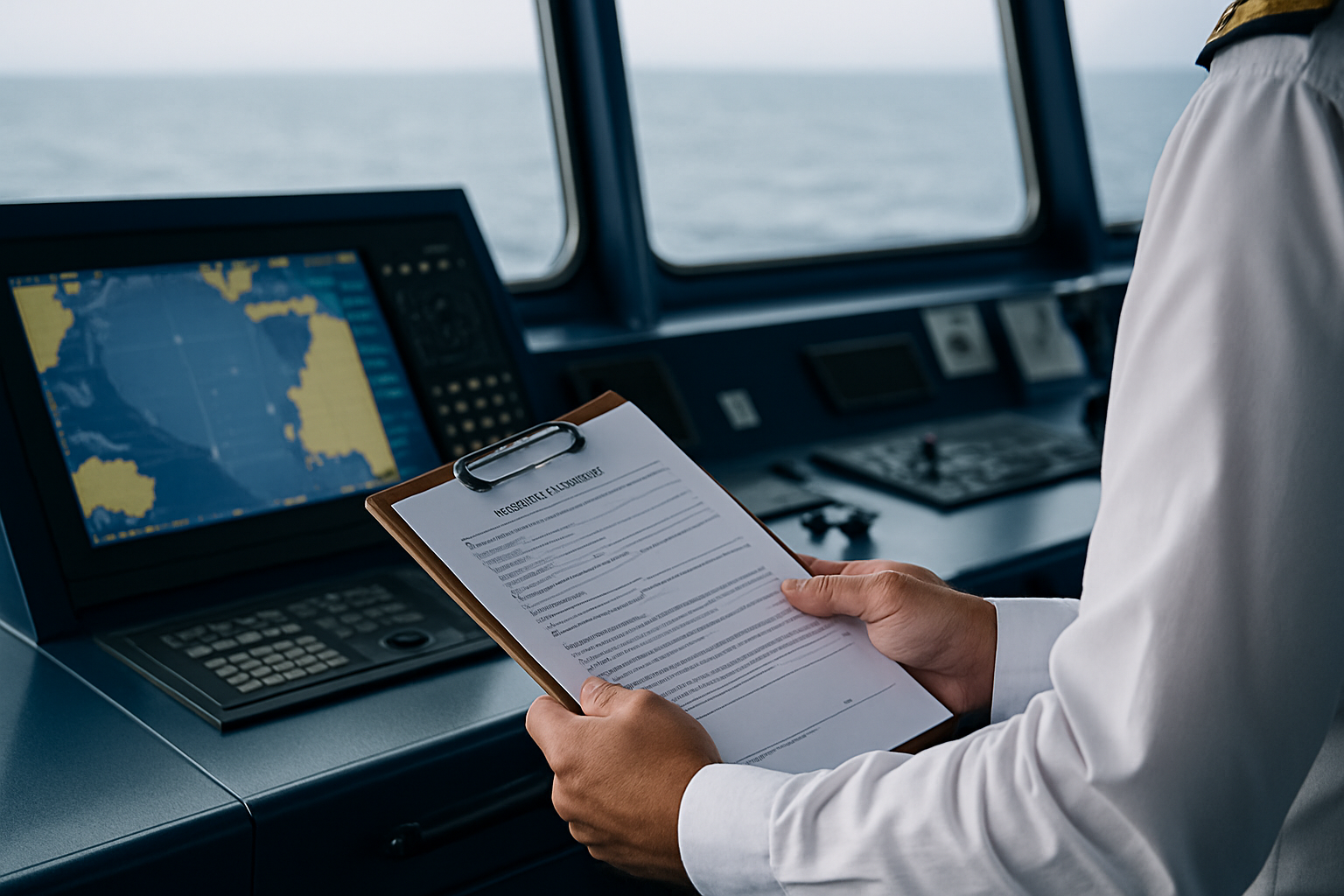
1. The Many Types of Investigations in a Marine Casualty
Maritime incidents rarely attract just one investigation. Typically, several run concurrently, each driven by different mandates:
1.1 Marine Safety Investigations (IMO Code)
These are strictly no-blame, focusing on causal factors, human elements, and systemic safety issues. Their sole purpose: prevent recurrence.
1.2 Statutory or Disciplinary Inquiries
These determine whether individuals or companies breached national or international maritime regulations.
1.3 Criminal Investigations
Coastal or port states may pursue criminal proceedings, especially in cases of death, pollution, or suspected gross negligence.
1.4 Insurance & Commercial Investigations
P&I Clubs, hull underwriters, and cargo interests investigate primarily to allocate liability and protect financial exposure.
1.5 Company Internal Investigations
These assess ISM Code compliance, management oversight, and organizational risks, including reputational damage.
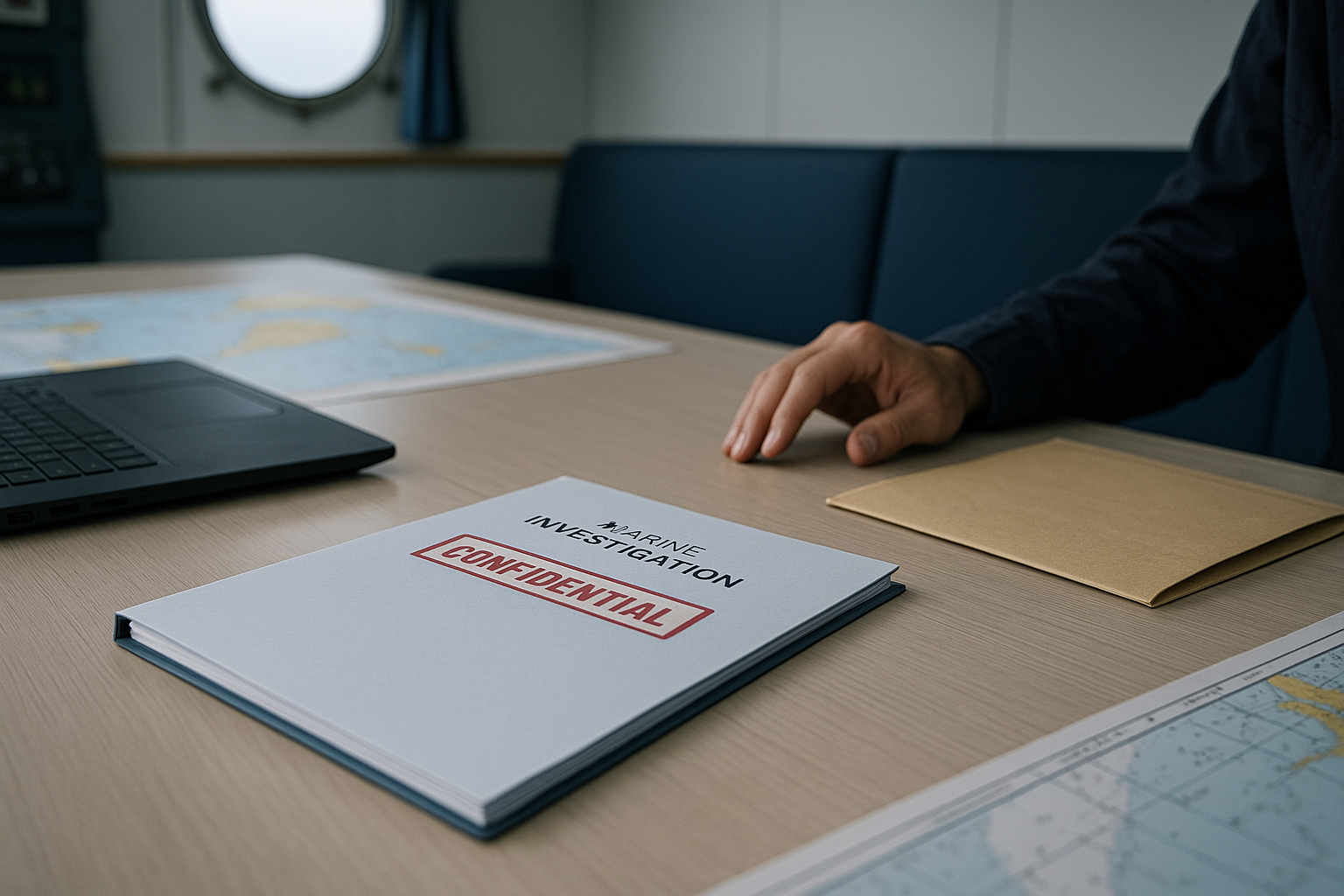
2. Confidentiality vs. Information Sharing
Confidentiality is a cornerstone of IMO-style safety investigations — but maintaining it is increasingly complex.
2.1 Confidentiality Under the IMO Code
Witness statements and evidence are protected to encourage open, honest participation.
2.2 Why Confidentiality Matters
It enables crew members and officers to speak freely without fear of personal or legal repercussions.
2.3 The Practical Reality
Absolute confidentiality is difficult to guarantee when courts or prosecutors demand access to investigative material.
2.4 Varying Legal Protections
Some countries shield safety investigation evidence from criminal use. Others do not, leading to uncertainty for seafarers and companies.
2.5 Striking the Balance
Administrations must protect sensitive information while maintaining reasonable transparency for public trust.
3. Balancing “No-Blame” Learning with Accountability
Perhaps the greatest challenge is separating safety learning from disciplinary responsibility.
3.1 The Core Tension
A no-blame environment is essential for systemic learning — yet misconduct cannot be ignored.
3.2 The Role of Safety Investigators
Their mandate is to identify causal factors, not assess guilt or fault.
3.3 The Role of Enforcement Authorities
They must act when negligence or breaches are evident.
3.4 The Need for Institutional Firewalls
Maritime Administrations must keep safety investigators separate from enforcement arms to maintain credibility.
3.5 Best Practices
Bodies like MAIB and NTSB publish factual findings while safeguarding underlying testimony from being misused.
4. Commercial & Insurance Dimensions
Behind every casualty lies substantial financial exposure — often driving a separate track of investigation.
4.1 Multiple Stakeholders, Multiple Angles
Owners, charterers, cargo interests, and others conduct their own reviews to protect contractual and liability positions.
4.2 Role of Insurers
P&I Clubs, H&M underwriters, and even the IOPC Fund deploy investigators to confirm causes, identify breaches, and assess compensation.
4.3 Confidential Commercial Findings
These are typically not shared with authorities and are used internally for claims strategy.
4.4 Reliance on Flag State Reports
Insurers often use the technical accuracy of flag-state factual reports when settling claims.
4.5 Financial Accountability
Ultimately, these investigations aim to ensure losses are correctly allocated.
5. The Real-World Balance
In practice, the ecosystem is complex — but functional when boundaries are respected.
5.1 Parallel Investigations Are the Norm
Multiple entities operate simultaneously with overlapping interests.
5.2 Safety Reports Are Public — Evidence Is Not
IMO-conformant investigations publish conclusions while keeping raw data confidential.
5.3 Courts Must Use Independent Evidence
They can rely on facts but must independently collect admissible evidence.
5.4 Commercial Pressures Can Create Friction
Competing priorities may complicate evidence collection or witness cooperation.
5.5 The Ideal Balance
Safety investigations guide learning, courts manage accountability, and insurers handle financial risk — and when these boundaries are respected, the system works.
Authored By:
Capt. Gajanan Kiranjikar, Maritime expert,
U.S. based accident investigator


Capt. M. M Saggi
One of the most respected and revered name in the maritime industry who has an holistic overview of how overall shipping functions at the world level as well as within India. Master Mariner (F.G), Extra master and MBA.
Ex-Director at Narottam Morajee Institute of Shipping, Ex-Nautical Advisor to govt. of India, Ex Additional Director General of Shipping, Ex Chief Examiner of mates,masters and extra masters. Ex Country head of casualty investigation. Lead Indian delegation to Maritime Safety Committee of IMO and International Oil Pollution Compensation fund meetings. Ex Trustee Mumbai, JNPT and Kandla Port
Leave a comment
View more
Give your career a boost with S&B professional services.
CV Prep/Evaluation Prep Service
 SeaCommerce
Shop maritime books & essentials
DG Medical Examiners
Find approved doctors near you
Tools & Calculators
Free maritime tools for seafarers
More Jobs
Agency and Logistics
Tanzania
Commercial Manager – Tanza..
Misc
Mumbai
Front Desk Executive – Mum..
Sales and Marketing
Mumbai
Sales Manager
Interview Prep/Mentoring
Find your polestar with the host of experts available on our platform
Know more