
Introduction to Shipping
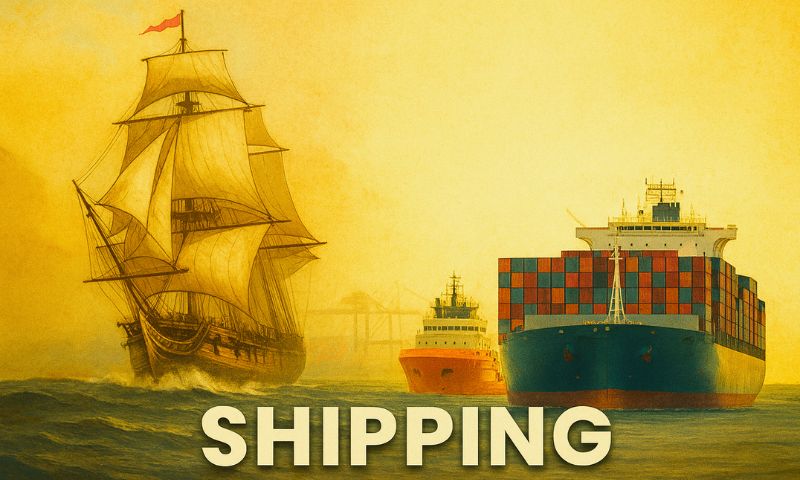
Shipping is one of the world’s oldest and most vital industries, carrying over 80% of global trade by volume. For thousands of years, ships have been the primary means of moving goods, people, cultures, and even military power across the seas. Evidence of India’s maritime tradition dates back more than 2,000 years, with archaeological findings confirming active overseas trade with Mesopotamia, the Romans, the Greeks, the Egyptians and historical records validate the visits of Megasthenes, Fa-Hien, Hiuen-Tsang, Al-Masundi and the influences left behind like the famous "Chinese Fishing nets" or the "tea cups" made of China clay or the export of the famous Indian Muslin pottery not to forget the famous Indian spices which were carried from the Kerala coast in the Arab Dhows. During the reign of Raja Raja Chola (985–1014 CE), India’s naval strength expanded dramatically, extending influence as far as present-day Thailand and Indonesia influencing their culture so much that you have the world tallest statue of "Lord Muruga" in Selangor, Malaysia and their version of the "Ramayan". This underlines the long-standing role of shipping not just in trade, but also in cultural exchange and political expansion.
From ancient times until today, shipping has facilitated the movement of goods, migration of people, deployment of navies in times of war, and the spread of cultures. Even in the digital age of instant communication and air transport, shipping remains indispensable, proving that while technology evolves, the oceans continue to serve as the most cost-efficient highways of the world.

So, what is Shipping?
At its core, shipping refers to maritime transport of goods and passengers across seas and oceans. Ships have evolved significantly over time — from wooden sailing vessels driven by the wind, to paddle steamers, to massive fuel-powered ships and even nuclear-powered vessels. Today, the industry comprises an extensive variety of ships specialised for cargoes such as containers, oil, gas, cars, and bulk commodities like coal and grain.
So, why is Shipping Important?
- Essential for Global Trade: Nearly every product we use — from crude oil to electronics — has travelled by sea at some stage.
- Cost-Effective: Ships can carry massive volumes of goods at lower cost compared to air transport.
- Connectivity: Shipping links producers and manufacturers with consumers and customers across continents, enabling truly global supply chains.
- Environmental Advantage: Despite their size, ships are more energy-efficient and environmentally friendly per ton of cargo moved compared to trucks or aircraft.

Worldwide Industry Ecosystem
Shipping is not just about ships at sea; it is a complex global ecosystem involving multiple stakeholders working together:
- Ports & Terminals – Hubs for loading, unloading, and storing cargo.
- Ship Owners & Operators – Manage and maintain vessels.
- Liner, Tramp, and Specialized Vessels – Provide different types of services depending on cargo and routes.
- NVOCCs (Non-Vessel Operating Common Carriers) – Act as intermediaries, consolidating shipments.
- Freight Forwarders & Logistics Providers – Arrange end-to-end cargo movement from factories to final destinations.
- Shore-Based Service Providers – Including classification societies, repair yards, insurance companies, and agents.
- Customs Authorities – Ensure legal compliance and smooth international trade.
Together, these players ensure that the wheels of global commerce turn efficiently.

Future Trends in Shipping
The shipping industry is undergoing rapid transformation, driven by technology and sustainability:
- Digitalization: The use of AI, Blockchain, and Big Data is improving fleet management, cargo tracking, and supply chain efficiency.
- Green Shipping: With growing environmental concerns, the industry is shifting to low-sulphur fuels, LNG, hybrid engines, and even wind-assisted propulsion to reduce emissions.
- Global Challenges: Shipping must also navigate geopolitical tensions, disruptions in global supply chains, and the pressing impacts of climate change on sea routes and infrastructure.
Conclusion
Shipping is truly the lifeline of the world economy. From ancient wooden vessels and wind-powered sails to today’s mega container ships, it continues to drive international trade, connect nations, and foster economic growth. To study shipping is to understand a vast, intricate, and dynamic global industry that quite literally ensures “the world goes around.” As students, professionals, or curious observers, appreciating the nuances of shipping helps us recognize how deeply our lives are shaped by the movement of ships across the oceans and and we require to urgently "get on board" or "our ship would sailed".



Kenneth S. George, MICS(UK)
A seasoned Shipping and Logistics Management professional with over 30 years of hands-on experience across global liner shipping, MTO, NVOCC, and CFS management, as well as marketing, operations, documentation, and legal functions. My career has been marked by strategic leadership roles in prominent industry organizations, where I successfully led regional operations, optimized complex supply chain networks, built long-term client partnerships, and drove sustainable business growth in international markets. Currently, I serve as a part-time and visiting faculty member at leading academic institutions including LIBA, AMET University, VELS University, and the Indian Institute of Logistics, among others. I offer a practical, industry-driven teaching approach that bridges the gap between academic theory and real-world logistics challenges—equipping students with actionable insights into shipping, logistics, international trade, and port agency operations. My professional journey includes senior leadership roles at reputed organizations such as Parekh Marine Group, J.M. Baxi, ZIM Integrated Shipping Services, and Forbes Gokak. I have developed deep expertise in liner agency operations, container yard and CFS management, freight forwarding, and customer service excellence. I hold professional certifications including MICS (UK), along with postgraduate qualifications in Business Management, Supply Chain Management, and Foreign Trade. My current focus lies in contributing to education, curriculum development, and mentoring the next generation of logistics professionals, leveraging three decades of operational and strategic experience.
Leave a comment
View more
Give your career a boost with S&B professional services.
CV Prep/Evaluation Prep Service
 More Jobs
Ship management
Mumbai
Senior Executive – Brandin..
Ship management
Mumbai
Assistant Manager – Vessel..
Ship management
Mumbai
HR Officer
Interview Prep/Mentoring
Find your polestar with the host of experts available on our platform
Know more

Contact Us