Maritime Digitalisation: Bridging the Gap to the Future
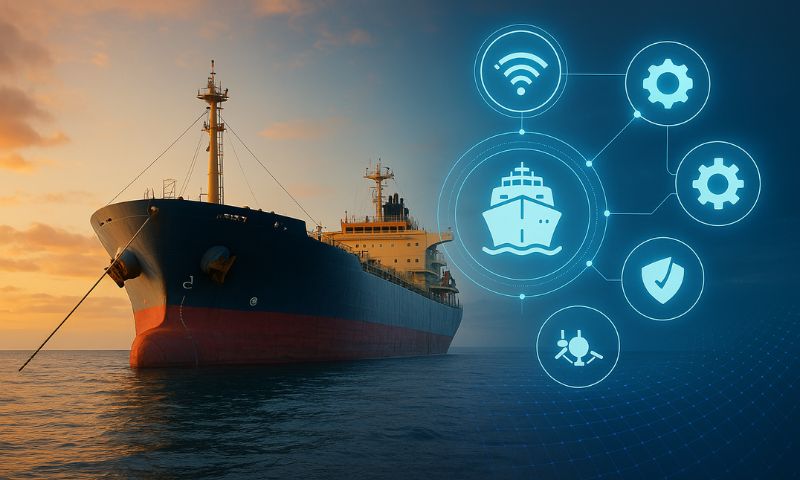
Transforming the High Seas with Technology
Introduction
The maritime industry is at a pivotal moment. While ships have long been marvels of engineering and endurance, however the systems that support their management—both onboard and ashore—are often outdated, manual, and fragmented. As other industries move swiftly into the digital age, ship management companies face increasing pressure to modernise operations, improve efficiency, and make better, data-driven decisions.
Digitalisation isn’t just a buzzword—it’s a powerful shift that’s changing how vessels are maintained, how crew are supported, how decisions are made, and how information flows between ship and shore. From predictive maintenance and smarter purchasing to automated workflows and real-time performance tracking, technology is unlocking new levels of transparency, safety, and cost control.
But with this opportunity comes real-world challenges: legacy systems, limited connectivity at sea, scattered data, quality of data, cyber security threats and a workforce that needs to adapt quickly. This blog explores the journey of digital transformation in ship management—highlighting the obstacles, the solutions, and the human element that ties it all together. Whether you’re a seafarer, superintendent, crewing officer, purchaser, or senior manager, digitalisation is reshaping your role.
Join us as we explore how the marriage of cutting-edge tools and frontline expertise is charting a course toward safer, smarter, and profoundly resilient maritime operations. The future of shipping isn’t on the horizon—it’s already here.

Digitalisation Challenges
Digitalisation comes with its own set of challenges, such as the need for robust cybersecurity measures, the complexity of integrating new technologies with existing systems, and ensuring data privacy. Additionally, there is the challenge of keeping up with rapid technological advancements and addressing the digital skills gap among the workforce.
Maritime Specific Challenges
For the maritime industry, the challenges are even more pronounced. Ships often operate in remote locations with limited connectivity, making real-time data transmission difficult. There's also a need for rugged, reliable technology that can withstand harsh marine environments. Furthermore, the maritime industry has traditionally been slow to adopt new technologies, and there can be resistance to change. Rapid staff rotations, both at sea and ashore, make it difficult to maintain continuity in training and technology implementation
Role of Mariners in Digital Transformation
Maritime professionals, like seafarers, superintendents, purchasers, and QHSE staff, understand the real challenges of ship management. Their experience is very useful when creating digital tools that actually work in daily operations.
If they get some training in new technologies—like low-code platforms, data tools,AI-ML or digital systems—they can help design better apps that fit their needs. When these experts work with developers from the start, the final tools are not only reliable but also easy to use. This teamwork leads to better adoption and more useful digital solutions across the fleet.

Approach to the Solution
Data Centralisation
Centralising data involves collecting all relevant information from various sources and storing it in a single, accessible location. This can help maritime companies streamline their operations, reduce redundancy, and make informed decisions based on comprehensive data analysis. Centralised data can also improve communication between different departments and ensure that everyone has access to the same information.
Ship management companies often deal with data scattered across different systems—some are modern cloud tools, while others are older, legacy software used for maintenance, purchasing, or crew management. These systems don't always connect with each other, making it hard to get a full picture of operations. To solve this, companies use a process called ETL, which stands for Extract, Transform, Load.
First, they extract data from each system—this can be done using APIs (for newer systems), direct database access, or file exports like Excel or CSV for older software. Sometimes data also needs to be pulled from third-party cloud applications, such as Classification Society portals, supplier systems, or freight forwarder platforms, which may offer APIs or downloadable reports. In some cases, web-scraping can also be used to collect data from websites that don’t offer direct integrations.
Next, the data is transformed—cleaned and formatted so it all follows the same structure and can be understood together. Finally, it is loaded into a central system like a data warehouse, where it can be used for reports, dashboards, or better decision-making. This approach helps ship management companies bring all their data—old, new, internal, and external—into one place for a complete and accurate view.
There are several ways to perform ETL, ranging from traditional programming approaches using languages like Python or Java, to more user-friendly No-Code/Low-Code platforms such as KNIME, Alteryx, and others. These platforms No-Code/Low-Code are especially valuable in the maritime domain, as they allow professionals without a deep technical background to build and manage data solutions with minimal coding. This empowers maritime staff to take a more active role in digital transformation by creating practical tools and workflows based on their operational expertise, without the need for extensive software development skills

Upgradation of Infra Structure
Upgrading infrastructure is a key step in helping ship management companies move forward with digital transformation. This means improving both the equipment on ships and the systems used onshore. Onboard, it involves installing modern sensors, automated systems, and advanced navigation tools that can collect and share useful data. A big part of this is also improving internet access. Low Earth Orbit (LEO) satellites like Starlink now make it possible for ships to have fast, reliable internet even in the middle of the ocean. This allows vessels to stay connected, run cloud-based software, and communicate with shore offices in real time—just like a floating office.
On land, companies also need to improve their IT systems to handle more data and support better communication with ships. This includes upgrading servers, using cloud platforms, and setting up secure systems to store and manage data. Strong infrastructure helps reduce manual work, improve safety, and support faster, better decisions. It also makes it easier for crew members and office staff to use digital tools and training platforms. Overall, upgrading infrastructure is an essential step toward making ship operations smarter, safer, and more efficient.

Data democratisation
Data democratisation means making data accessible to everyone within an organisation, regardless of their technical background. This empowers employees at all levels—onboard ships and in offices—to use data for better decision-making and problem-solving. To support this, companies need to invest in easy-to-use data platforms and offer proper training so that staff can confidently work with the available information. However, as data becomes more widely accessible, it's important to manage access control carefully. Not every user should see all types of data—sensitive information like financials, crew details, or safety reports must be protected. Role-based access control ensures that people only access the data they need for their job, maintaining both security and compliance. When done right, data democratisation leads to faster decisions, more innovative ideas, and stronger overall performance—without compromising on data protection.

Building data solutions
Developing tailored data solutions is essential for addressing specific maritime challenges. This includes creating predictive maintenance systems that can alert operators to potential issues before they become critical, optimising route planning to save fuel, and enhancing cargo management systems. By building customised data solutions, maritime companies can improve efficiency, reduce costs, and enhance safety.
One of the key advantages of centralising data and building integrated solutions is the ability to generate deeper insights by combining information from different departments. For example, by bringing together main engine performance data from the Technical Department, Planned Maintenance System (PMS) data, and procurement records from the Purchase Department, companies can gain a clearer view of spare part usage, maintenance trends, and supplier performance. If certain vessels show repeated issues despite timely maintenance and spare part replacements, this combined data can help identify whether the problem lies in equipment wear patterns, poor planning, or inconsistent spare quality. It can also support fleet-wide auditing of supplier reliability and cost-effectiveness. This kind of cross-functional insight not only improves maintenance planning but also enhances procurement strategies and budget control—leading to more efficient operations and better-informed decision-making.

Using Automation to Save Time on Repetitive Work
In ship management, many office tasks—like reading emails, saving files, sending reminders, or updating records—are repeated every day. Robotic Process Automation (RPA) is a way to let computers do these routine tasks automatically, saving time and reducing errors.
Tools like Microsoft Power Automate, Zapier, Knime, Alteryx and SharePoint make it easy to build these automations without needing to write code. For example:
- When an invoice or quotation comes by email, it can be saved in SharePoint and linked to the right purchase order.
- A crew change request can trigger an automatic alert to HR or the crewing team.
- Certificates or inspection dates nearing expiry can trigger automatic reminders to the right team.
Now, Artificial Intelligence (AI) is making these tools even smarter. For example:
- AI can read and understand emails, summarise mails and suggest how to respond.
- AI tools can scan documents (like PDFs or scanned forms) and pull out important information automatically—saving time on manual data entry.
- AI-powered chatbots can answer common crew or office questions and guide users through digital forms or tasks.
- Predictive AI can help suggest the next action, like reminding you to reorder a spare part based on past usage patterns.
These AI features are available in tools like Microsoft 365 Copilot, Power Automate AI Builder, and other platforms, and they work well with systems maritime companies already use like Outlook, Teams, Excel, and SharePoint.
By combining automation with AI, maritime staff can work faster and smarter. They can spend less time on repetitive tasks and more time on planning, problem-solving, and improving operations. Even small AI-powered automations can bring big benefits when used across the fleet.

Usability & User Experience
Great functionality can’t save a poorly designed interface—if users can’t use it, they won’t.
Usability and user experience are critical to the success of any digitalisation effort. Tools must be easy to navigate, intuitive, and understandable, especially for users without a strong technical background. A user-friendly design, paired with proper training, ensures that employees can confidently use digital systems in their daily work.
At the same time, creating a positive user experience goes beyond simplicity. It means designing systems that are responsive, reliable, and tailored to the real needs of their users—whether they’re onboard crew or office staff. When users find digital tools helpful and easy to use, adoption improves, efficiency increases, and job satisfaction rises. In the maritime industry, where day-to-day operations can be complex and high-pressure, thoughtful design can make all the difference in turning digital tools into real, lasting solutions.
Technology Training for Seafarers and Shore Staff
As the maritime industry becomes more digital, it’s essential that both seafarers and shore-based staff are trained to use new technologies effectively. Many systems—like maintenance platforms, digital checklists, remote monitoring tools, and cloud-based communication—are now part of daily operations. Without proper training, these tools may be underused or misused, leading to inefficiencies and safety risks. Training helps crew and office teams understand how to use technology confidently, make better decisions using data, and avoid errors. It also increases job satisfaction, especially when people feel comfortable using modern tools instead of struggling with them. With digital tools evolving fast, continuous learning ensures that the workforce stays updated, capable, and ready to contribute to a safer, smarter, and more efficient shipping operation.

Conclusion: Charting a Collaborative Course Forward
The digital transformation of the maritime industry isn't just about adopting new tools—it's about fundamentally rethinking how we navigate the complexities of modern shipping. As we’ve explored, challenges like fragmented data, remote operations, legacy systems, and skills gaps are significant but not impossible to solve.
The solutions lie in a balanced, human-centric approach:
- Centralising data to break down silos and unlock cross-functional insights.
- Upgrading infrastructure (both onboard and ashore) to enable real-time connectivity.
- Democratising data responsibly, empowering crews and shore teams alike.
- Leveraging automation & AI to eliminate repetitive tasks and amplify human expertise.
- Prioritising usability and training to ensure tools are adopted, not abandoned.
Critically, success hinges on collaboration. Mariners, superintendents, purchasers, and technical staff hold the operational wisdom needed to design solutions that truly work. When this frontline expertise partners with digital innovation—supported by intuitive low-code tools and continuous learning—we bridge the gap between tradition and transformation.
The future of maritime isn't on the horizon; it’s here. By embracing technology as an enabler of safety, efficiency, and sustainability—and placing people at the heart of the journey—we’re not just adapting to change. We’re steering the industry toward a smarter, more resilient tomorrow.
The tide of digitalisation is rising. Will you ride the wave?



Tiju Chandy
Tiju Chandy is a seasoned Marine Chief Engineer and software professional with over 20 years of sailing experience across LNG, LPG, bulk carriers, cargo vessels, and car carriers. After a successful seafaring career, he transitioned into the tech domain, bringing deep maritime insight to digital innovation. Currently part of Synergy, Tiju leads the technical and domain development of a next-gen Ship Management Platform aimed at transforming traditional vessel operations into a data-centric, automated ecosystem. The platform integrates data from multiple sources, generates actionable insights, streamlines decision-making, and enhances operational efficiency. Combining his core maritime expertise with hands-on software proficiency, Tiju is passionate about solving complex business problems and shaping the future of ship management through technology.
Leave a comment
View more
Give your career a boost with S&B professional services.
CV Prep/Evaluation Prep Service
 More Jobs
Ship management
Mumbai
Senior Executive – Brandin..
Ship management
Mumbai
Assistant Manager – Vessel..
Ship management
Mumbai
HR Officer
Interview Prep/Mentoring
Find your polestar with the host of experts available on our platform
Know more

Contact Us