
PERSONAL FINANCE - Navigating your way to Financial Freedom

“Every meaningful journey starts with clarity, knowing where you are and where you wish to go. In personal finance too, awareness charts your course and discipline carries you through the winds of uncertainty”
The journey to personal finance begins with mindset, understanding the difference between needs and wants and making conscious choices that shape your financial future.
Seafaring is a career like no other, one that rewards you in many ways, but also asks for much in return. In most cases you earn in foreign currency, travel the world and often earn & save more than most shore-based professionals. However along with these privileges come challenges only a seafarer truly understands - long months away from family, uncertainty of the next contract, irregular work-life balance, isolation and mental health challenges and transitioning to life ashore, where the pay generally does not match your sailing earnings.
That’s why managing money isn’t just important, it’s essential. It’s the skill that gives you peace while at sea, security when on vacation and confidence when transitioning ashore.
Personal finance:
- Isn’t about restricting yourself, it does not mean saying “No” to everything you enjoy.
- Is not about cutting down every expense or living a miserly life.
- Is about Freedom, not sacrifice.
- Is about making money work for you.
- Is about making smart choices so your hard work today builds the life you want tomorrow.
- Is about living with peace of mind, knowing you’ve prepared for both the storm and the calm.
Once you have the right mindset and awareness, the next step is to give your finances a clear direction.

Setting Goals – Charting the Voyage
Goals are like a map for your money—they give it direction and purpose. Without goals, your savings and investments may drift aimlessly, like a ship without a compass.
Goals can be divided into:
- Short-term: Things you want in the next few months or a year or two, like buying a gadget, a dream vacation or a course to upgrade your rank etc.
- Medium-term: Plans for the next 3–7 years, like your children’s education or buying a home.
- Long-term: Big-picture goals for 15+ years, like building a retirement fund.
The key here is to align your investments with these timelines. Short-term goals may need safe, liquid options, while long-term goals can take advantage of growth through compounding investments that ride out market ups and downs.

Understanding Cash Flow – Navigating Your Money Stream
Before you take charge of your finances, you need to know how money moves in your life. Cash flow simply means tracking what comes in (income) and what goes out (expenses).
It’s about being aware of your earning pattern, your fixed commitments like EMIs or family support and your spending behaviour, both at sea and onshore.
When you clearly see where your money flows, you’ll often realize that it’s not about how much you earn, but how much you manage to keep.
This awareness forms the foundation for effective budgeting, “because you can’t control what you don’t understand”

Budgeting – Your Financial Navigation Chart
Personal finance is a journey and every journey begins with a map; your first map is a clear budget.
Budgeting is tracking how much money comes in and where it goes out.
Expenses must be planned not just for months onboard but also for vacation periods when there’s no active earning.
Budgeting helps in “averaging out” salary: for example, if you sail 8 months a year, your income should be spread over 12 months to avoid a financial crunch onshore.
Easy way is to use budgeting apps or even simple Excel sheets to track earnings vs. expenses.

Saving – Your Financial Anchor
Savings are what keeps you steady when life gets unpredictable—they are your lifeboat, ready when storms or surprises come your way.
Savings are cash reserves set aside for emergencies, usually in safe, liquid instruments.
Build a 6-12, month emergency fund for periods of uncertainty like medical issues, contract gaps, training requirements or other family needs).
Savings are different from investing: Savings protect you from shocks, while investments grow your wealth. Both are very essential.

Debt Management – Balancing the Load
Debt refers to money borrowed through loans, credit cards or through EMIs. Effective debt management ensures that borrowing remains a tool for growth and progress, not a burden.
Just like a ship must balance its load to sail smoothly, your finances stay stable only when debt is well-planned, timely repaid, and within manageable limits.
For most people, loans are part of financial life, whether for housing, education, or other needs. But understanding how debt works can help you save a lot of money over time.
- Home loans are long-term commitments. In the early years, a large part of your EMI goes toward interest, not the principal amount. This means that even if you’ve been paying for several years, your outstanding loan may still be high.
So, should you decide to pre-close a loan later in the tenure, compare whether the same money could earn you better returns through alternate investments like mutual funds, gold, fixed deposits etc. Sometimes, investing smartly instead of prepaying may work better.
- Credit card debt is the most expensive kind of borrowing. Interest rates can go as high as 36–42% per year if full payment isn’t made on time. What begins as a small unpaid balance can quickly snowball into a large debt trap. As a rule, pay your credit card bills in full every month and avoid using it for unnecessary expenses.
- As a seafarer earning in US dollars, there’s an interesting advantage, when the Indian Rupee depreciates, your dollar income becomes stronger in value. This means you can use your foreign earnings to prepay high-interest rupee loans more efficiently, as the exchange rate gives you more rupees per dollar, effectively lowering your repayment cost.

Investing – Growing Beyond Inflation
Think of investing as putting your money to work while you’re at sea. Your salary keeps coming in, but if you just let it sit in a bank, the rising prices, what we call “inflation”, can quietly eat away its value.
Investing is making sure your money grows faster than prices, otherwise, you’ll be able to buy less tomorrow than today.
Make sure your money is working hard enough to keep up with the rising cost of living.
Pick investments that grow more than inflation. By choosing such investments you ensure that your hard-earned salary works for you, both today and in the long journey ahead.
Understand the Power of Compounding - Compounding is when your money earns returns and then those returns start earning more returns. Over time, this snowballs into big growth. The longer you let it compound, the faster and larger your wealth grows.
Use these thumb rules for a quick ROI (Return on Investment) calculations:
- Rule of 72: Divide 72 by annual return % that’s = to time (in years) to double your money.
- Rule of 114: Same method as above = Approximate years to triple your money
- Rule of 144: Same method as above = Approximate years to quadruple your money.
Challenge lies in choosing the right investment, which is quite tricky. Balanced diversification is the key.

Insurance – Your Lifejacket: Because Life Has No Guarantees
Insurance safeguards you and your family from financial risks arising out of health issues or loss of life.
Employer insurance usually works only while you’re onboard. This means that if you’re sailing, most medical emergencies, accidents or health issues are covered by your company’s policy. But once you are signed off, on vacation or between contracts, this coverage often stops. Any hospital visits, treatments or unexpected health problems during this period would come directly out of your pocket, which can be costly.
That’s why personal health insurance is essential. A good cover, ensures you and your family are protected year-round, not just when you are onboard. It covers hospitalizations, surgeries and critical illnesses, giving peace of mind regardless of where you are.
Similarly, life insurance is critical. A term plan ensures that if something happens to you, your family is financially secure. This is very important because life is unpredictable and your loved ones should never have to struggle financially in your absence.
To sum up relying solely on employer insurance leaves gaps. Personal health and life insurance act as a financial safety net, protecting you and your family through every stage of your career and life.

Retirement Planning – Securing Your Future Beyond Work
Retirement planning means making sure you can live comfortably when your regular income stops.
The earlier you start, the easier it becomes. Money grows with time through compounding and even small regular investments can become a large corpus, if you start early.
It’s also important to understand inflation—the silent force that reduces the value of money. For example, ₹1 crore today might only be worth ₹40–50 lakh in real terms 20 years later because prices keep rising. So, if you want to maintain your lifestyle after retirement, your savings must grow faster than inflation.
Many people rush to buy a house early in their career with a home loan. Remember in the first few years, most of your EMI goes towards interest, not ownership. If you’re comfortable renting for a few years, it might be wiser to invest the difference between EMI and rent, in good growth instruments like mutual funds. This helps build your financial base first and you can buy your dream home later with more security and lesser stress.
In short, retirement planning is your long-term voyage to financial independence. Start early, stay consistent and let time and compounding do the hard work for you.

Financial Discipline & Consistency – Staying the Course
Just like a ship reaching its destination through steady navigation, financial freedom is achieved through consistent, disciplined actions.
Some small steps are:
- Regular saving and investing.
- Timely payments / clearing dues.
- Habitual budgeting & monitoring
Consistency is more important than the quantum of money. A disciplined approach turns saving and investing into a lifestyle, not a chore. Over time, these steady habits compound into significant wealth, giving you freedom, security, and confidence, whether at sea or ashore.

Common Mistakes – Navigational Errors in Financial Planning
Even the most experienced person can hit financial turbulence if they’re not careful.
Here are some common mistakes to watch out for:
- Overspending During Shore Leave.
- Relying Solely on Safe but Low-Growth investments.
- Ignoring Inflation and strength of Compounding.
- Depending solely on Employer Insurance.
- Delayed Retirement Planning.
- Unbalanced Debt Management.
- Lack of Goal Alignment
Remember, awareness is half the battle. Spotting these mistakes early lets you adjust your sails, navigate through financial storms and keep your journey toward financial freedom smooth and steady.
Start small, stay consistent and watch your tiny steps grow into lasting financial freedom.


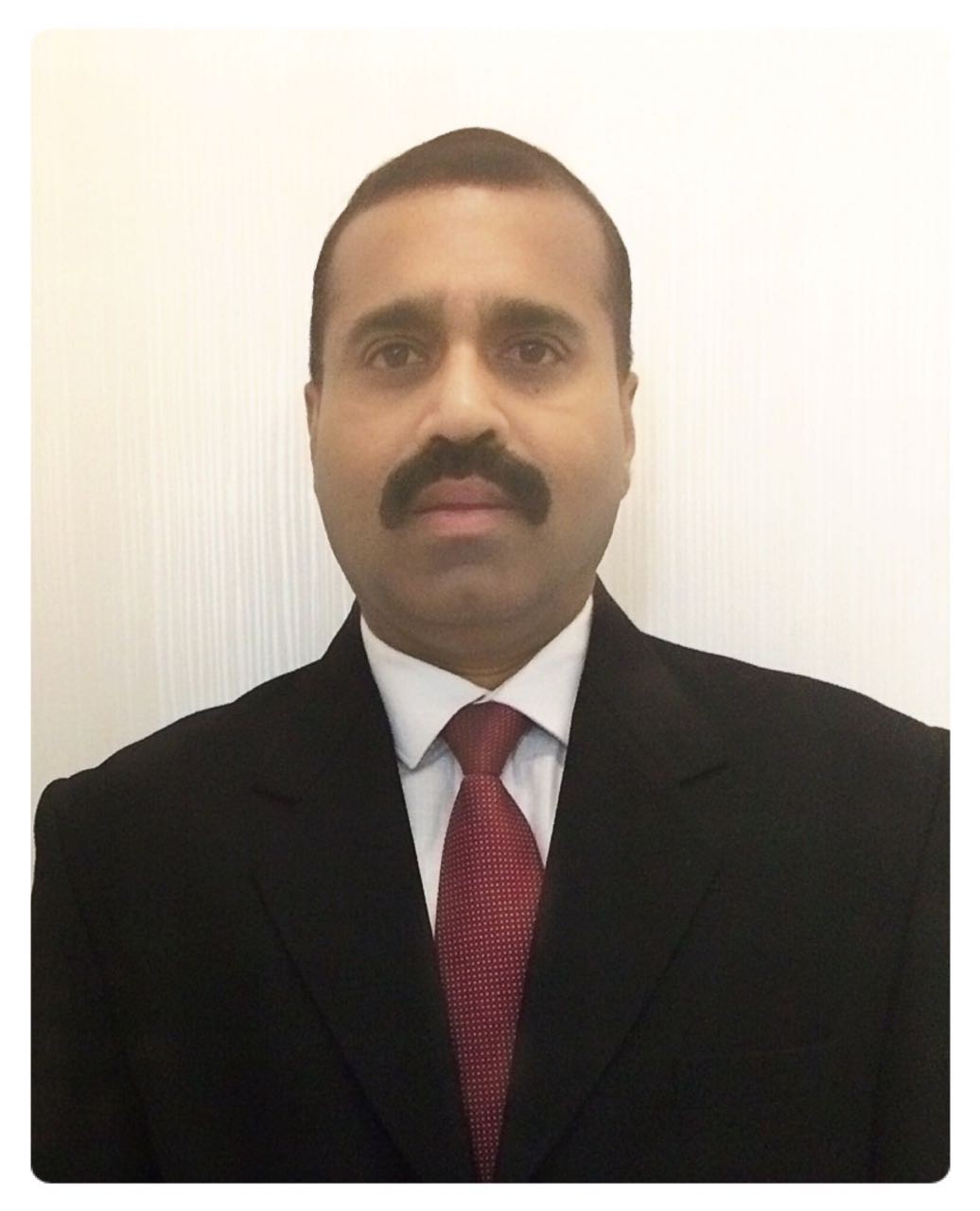
Vinay Naidu
Mr. Vinay Naidu brings about four decades of leadership experience in the maritime and shipping industry and has held leadership roles in maritime finance with renowned multinational companies. His passion for IT and technology, uniquely positions him to bridge the gap between financial world and digital transformation in maritime operation. In addition, he has served as a lead auditor for quality management systems, ensuring compliance and operational excellence. Beyond shipping, he is actively engaged in capital markets with a focus on derivatives and leverages his competence in occupational psychometric analysis to mentor and guide young adults in their career development.
Leave a comment
View more
Give your career a boost with S&B professional services.
CV Prep/Evaluation Prep Service
 More Jobs
Ship management
Mumbai
Senior Executive – Brandin..
Ship management
Mumbai
Assistant Manager – Vessel..
Ship management
Mumbai
HR Officer
Interview Prep/Mentoring
Find your polestar with the host of experts available on our platform
Know more

Contact Us